The Giggle Epidemic
 Chapter One
The Spark
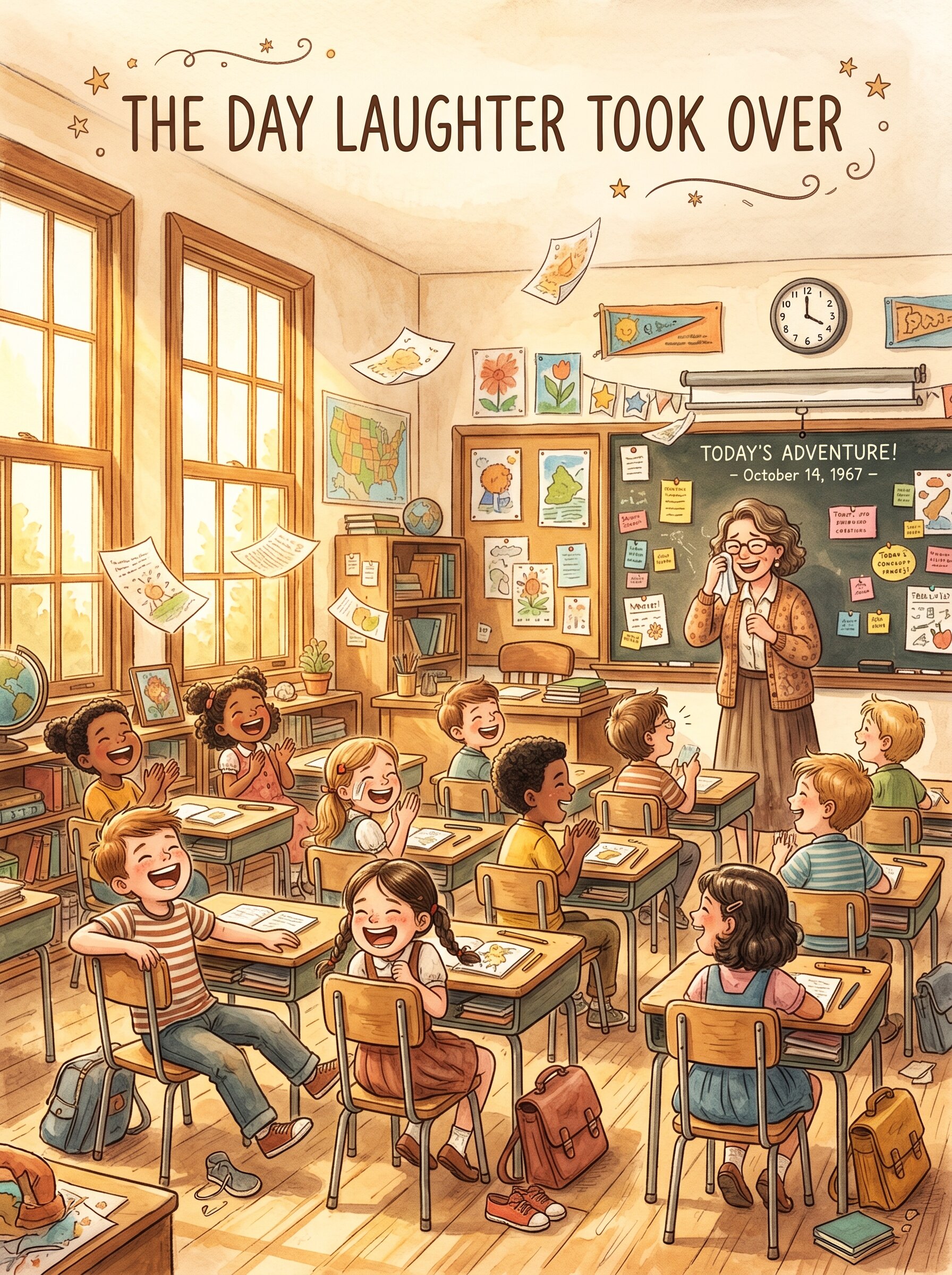
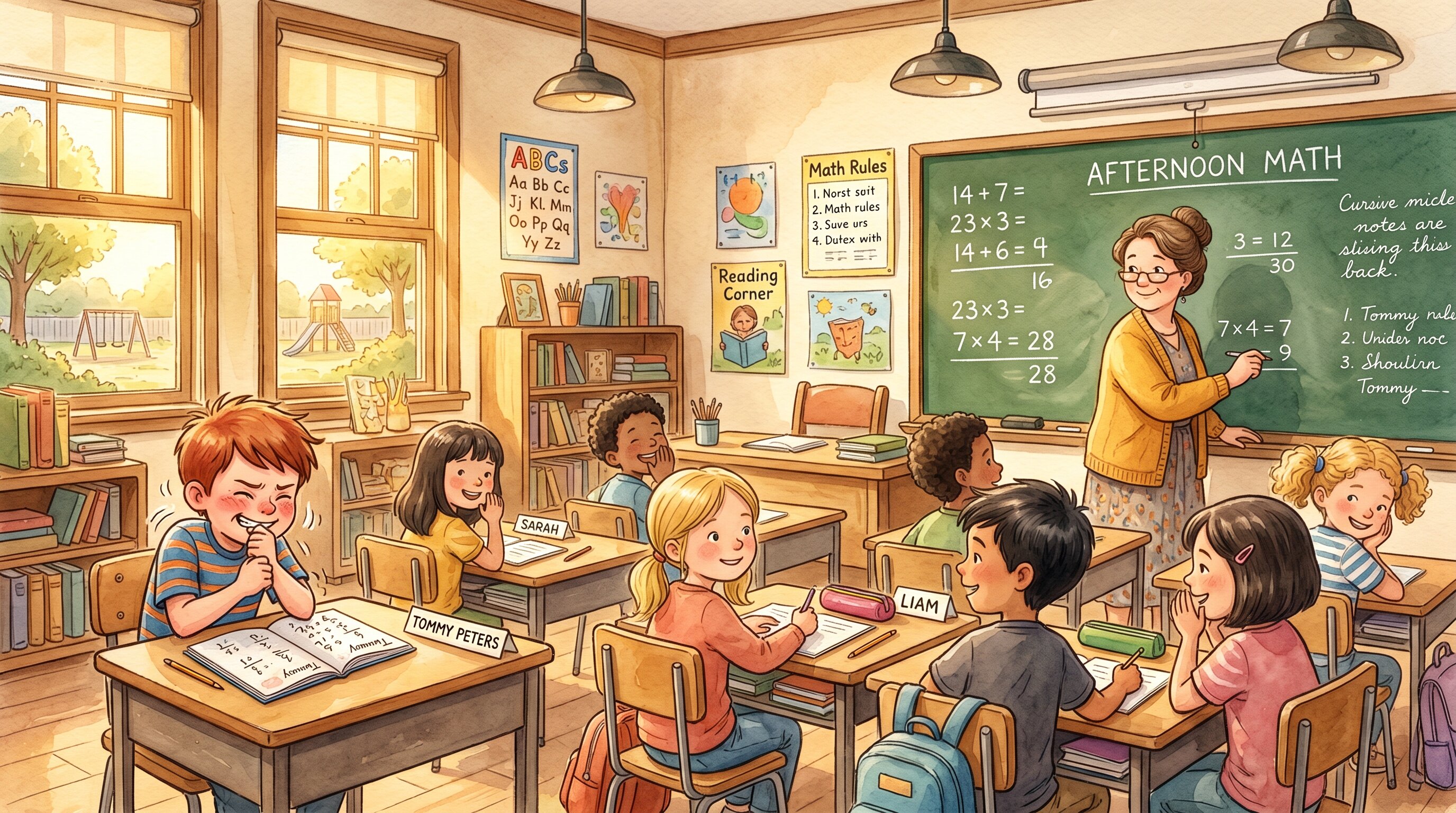
It started with a single snicker from the back of Mrs. Henderson's third-grade classroom. Just a tiny outburst, quickly stifled by the student responsible as all eyes turned toward the source of the disturbance. The perpetrator, Tommy Peters, shrugged innocently while Mrs. Henderson frowned in mild surprise.
"Something funny you'd like to share with the class, Tommy?" the teacher asked.
Tommy vigorously shook his head, biting his lip to keep from laughing again. He didn't even know why he was laughing. That was the thing. There was no joke. There was no reason. It just bubbled up from somewhere inside him, warm and fizzy, like a shaken soda bottle with the cap still on.
Mrs. Henderson eyed him for a moment before turning back to her math lesson on the chalkboard.
But then it happened again — a soft giggling peal, this time unmistakably from the vicinity of Suzie Miller's desk across the room. Suzie went red in the face, desperately trying to suppress her bubbly outburst without much success. She clamped both hands over her mouth. Her shoulders shook.
"Suzie! This is no time for laughing," Mrs. Henderson said, hands on her hips. "I don't know what's so funny, but you both need to get ahold of your—"
Her words caught in her throat as Jimmy Walters, seated right in front of her, erupted into a guffawing howl of uncontrollable laughter. He slapped his hand over his mouth, but it was too late — his raucous chortles had already set off a fresh wave of giggles rippling across the classroom like dominoes.
"Hey, what's so funny?" Bobby Sanders piped up from the back, before dissolving into snickers himself.
Within seconds, half the class had joined the inexplicable laugh party. Desks shook. Papers went flying. Mrs. Henderson's attempts to restore order fell on deaf ears as a wave of hilarity washed over the stunned students.
Even she wasn't immune. Try as she might to remain stern, the teacher's lips began twitching upward into a reluctant smile as the uproarious pandemonium reached a crescendo all around her. She let out a strangled cough, attempting to swallow her own burgeoning chuckles.
And then, unable to resist the infectious hilarity overtaking the room, Mrs. Henderson threw back her head and laughed. Really laughed. The kind of laugh she hadn't had since she was a little girl catching fireflies in her grandmother's yard.
Any last shreds of self-control disintegrated in an instant. Tears streaming down their faces, the entire class — teacher included — dissolved into a roaring chorus of uncontainable mirth, their laughter echoing through the halls of Mayfield Elementary.
No one could explain it.
No one tried.
It just felt good.
 Chapter Two
The Hallways
Within the hour, the mysterious giggle epidemic had spread well beyond Mrs. Henderson's classroom.
It moved the way a good smell moves — drifting under doors, curling around corners, slipping through the cracks. You didn't have to be in the room. You just had to be close enough to hear it. And once you heard it, you were done for.
Mr. Kowalski's fifth-graders were the next to go. Charlie Humphreys, a normally quiet boy who spent most of his time drawing rockets in the margins of his notebook, was dutifully taking notes on the American Revolution when a single, unexplained giggle slipped out. He didn't even realize it had happened until the girl next to him started laughing, and then the boy behind her, and then the entire row.
Mr. Kowalski stood at the front of the room with his hands raised, trying to calm everyone down. "People, people, let's focus—" But his voice cracked on the word "focus," and that was all it took. The whole class went.
Down the hall, the fourth-graders were next. Then the second-graders. Then the kindergartners, who didn't need much encouragement to begin with.
The school secretary, Mrs. Pulaski, heard the commotion from the front office. She marched down the hallway with the purposeful stride of a woman who had maintained order at Mayfield Elementary for twenty-three years. She opened the door to the nearest classroom, ready to deliver a firm reminder about indoor voices.
She lasted about four seconds.
Something about the sight of thirty children laughing so hard that some of them had slid off their chairs and were sitting on the floor — combined with the teacher leaning against the whiteboard, wiping tears from his eyes — broke through her defenses like sunshine through a window. She covered her mouth. She tried to look serious. She snorted. And then she was gone.
By midday recess, the school grounds had descended into joyful madness. Children laughed on the swings. They laughed on the jungle gym. They laughed while hanging upside down from the monkey bars. Teachers stood in clusters, holding their sides, trying to catch their breath between waves of giggles.
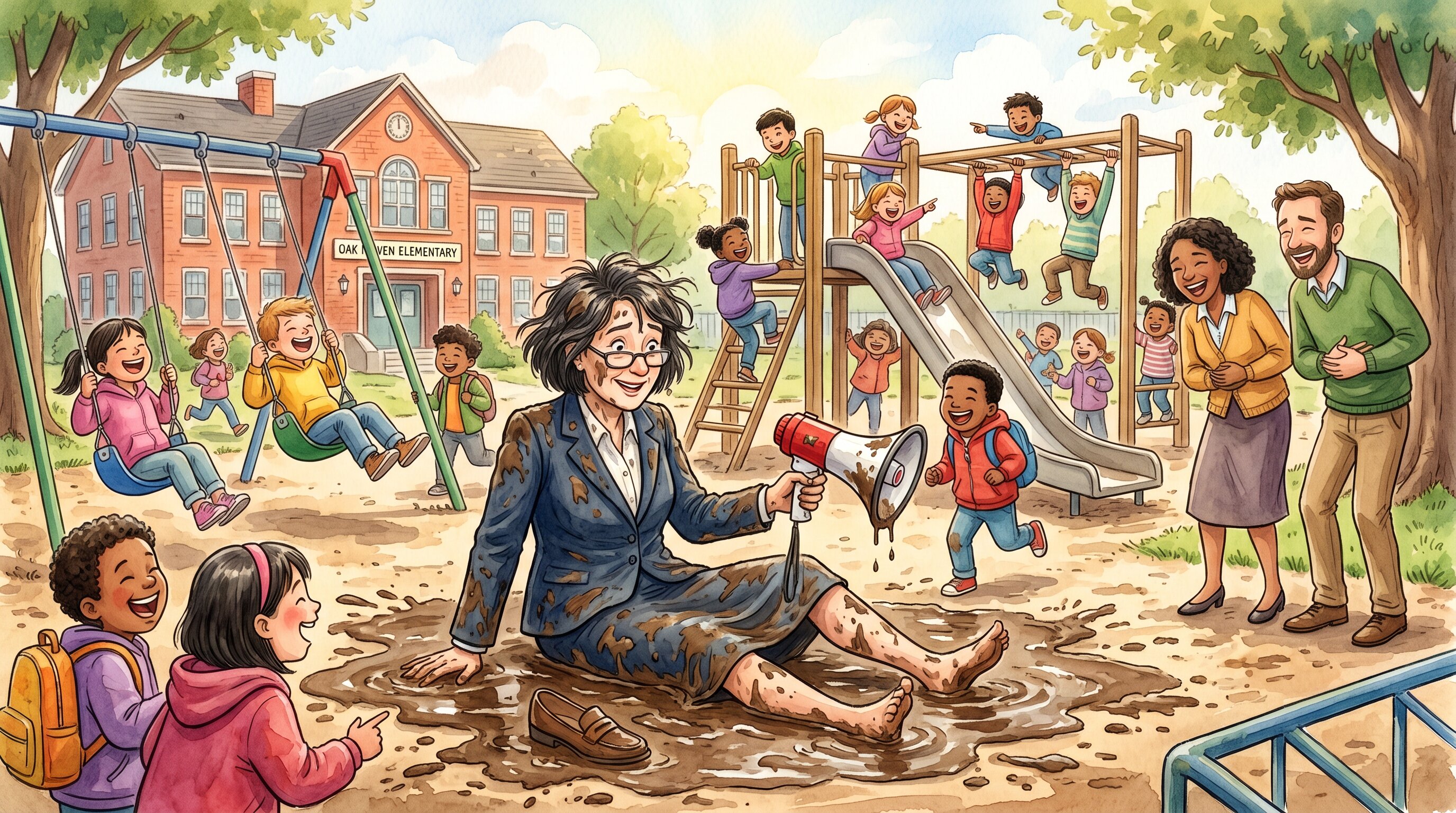
Vice Principal Rosenblum marched out onto the playground with a bullhorn, determined to be the one person who could put a stop to this. She raised the bullhorn to her lips, took a deep breath, and said, "Attention, students. This is Vice Principal Rosenblum. I need everyone to—"
She stepped in a mud puddle.
Her left shoe stayed behind. Her right foot kept going. For one glorious, suspended moment, she windmilled her arms like a cartoon character before landing with a magnificent splat.
She sat there in the mud, bullhorn still in hand, her glasses crooked on her face.
The playground went silent for exactly one second.
And then every single child, every single teacher, and even the crossing guard at the far end of the parking lot erupted into the loudest, most joyful laughter Mayfield Elementary had ever heard.
Vice Principal Rosenblum looked down at herself. Mud on her blazer. Mud on her skirt. One shoe missing. She looked up at the sea of laughing faces.
And she laughed too. A real laugh. A deep, helpless, wonderful laugh that she would remember for the rest of her life.
 Chapter Three
The Town
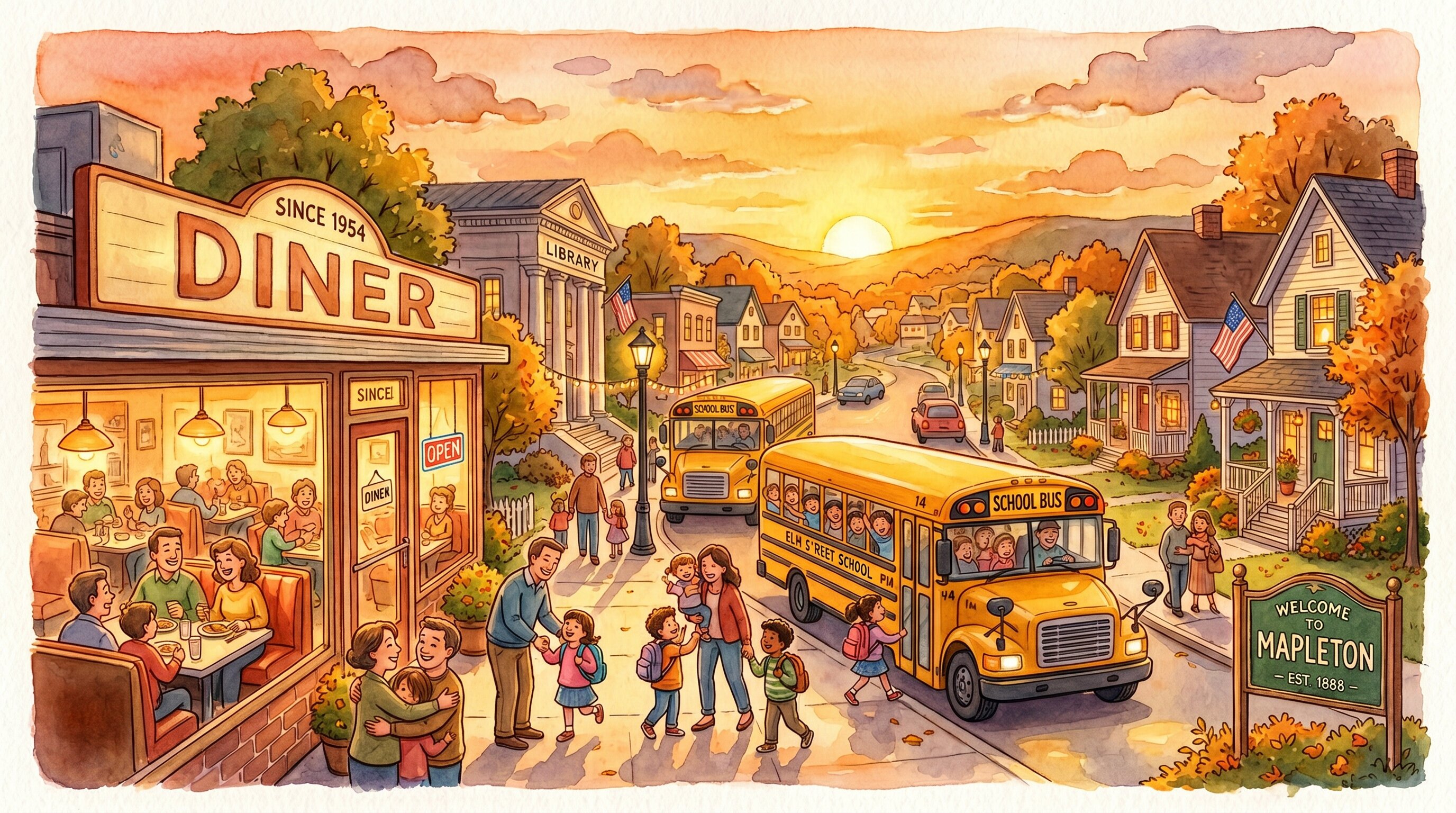
By the end of the school day, parents arrived to pick up their children and found a schoolyard full of the happiest people they had ever seen. Teachers were sitting on benches with tears of laughter still drying on their cheeks. Children ran to their parents' cars with enormous grins, still giggling in little aftershocks.
"What happened today?" parents asked.
"I don't know," the children said. "But it was the best day ever."
The laughter rode home in minivans and station wagons, in the backseats of sedans and the cabs of pickup trucks. It walked home with the kids who lived close enough to walk. It traveled on school buses that rattled through neighborhoods where people looked up from their lawns and gardens, wondering why every child on the bus was laughing.
At the Walters house, Jimmy's mother was making dinner when Jimmy came through the door, still grinning. He told her about Mrs. Henderson. He told her about Mr. Kowalski's voice cracking. He told her about Vice Principal Rosenblum in the mud puddle. By the time he got to the part about the crossing guard, his mother was leaning against the kitchen counter, laughing so hard the pasta water boiled over.
Jimmy's father came home from work to find his wife and son sitting at the kitchen table, laughing about nothing. He stood in the doorway, briefcase in hand, confused. He asked what was so funny. They tried to explain. They couldn't. They just laughed harder. He sat down. He watched them. And slowly, inevitably, the corners of his mouth turned up.
Across town, similar scenes played out in living rooms and kitchens and backyard patios. The laughter was patient. It didn't rush. It didn't force itself on anyone. It just waited, warm and easy, until you were ready.
At the Mayfield Diner, the evening crowd noticed something unusual. Every family that came in was smiling. Not the polite, tired smiles of people at the end of a long day, but real smiles — the kind that made their eyes crinkle and their shoulders relax. The waitress, Dolores, who had been waitressing for thirty-one years and had seen just about everything, said it was the best Tuesday evening shift she'd ever worked.
The cook heard Dolores laughing through the kitchen window. He peeked out and saw the whole restaurant smiling. He shook his head and went back to his grill, but he was smiling too.
By nine o'clock, the laughter had settled into something quieter — a warmth that lingered in the chest, a lightness in the step, a softness around the eyes. Children fell asleep easily that night, still smiling. Parents sat together on couches, not watching television, just sitting. Feeling good. Feeling like something nice had happened, even if they couldn't quite put it into words.
 Chapter Four
The Quiet Morning
The next morning, Mayfield woke up different.
Not dramatically different. The sun rose on schedule. The coffee makers beeped at the usual time. The school buses followed the same routes. But something was softer. Something was lighter.
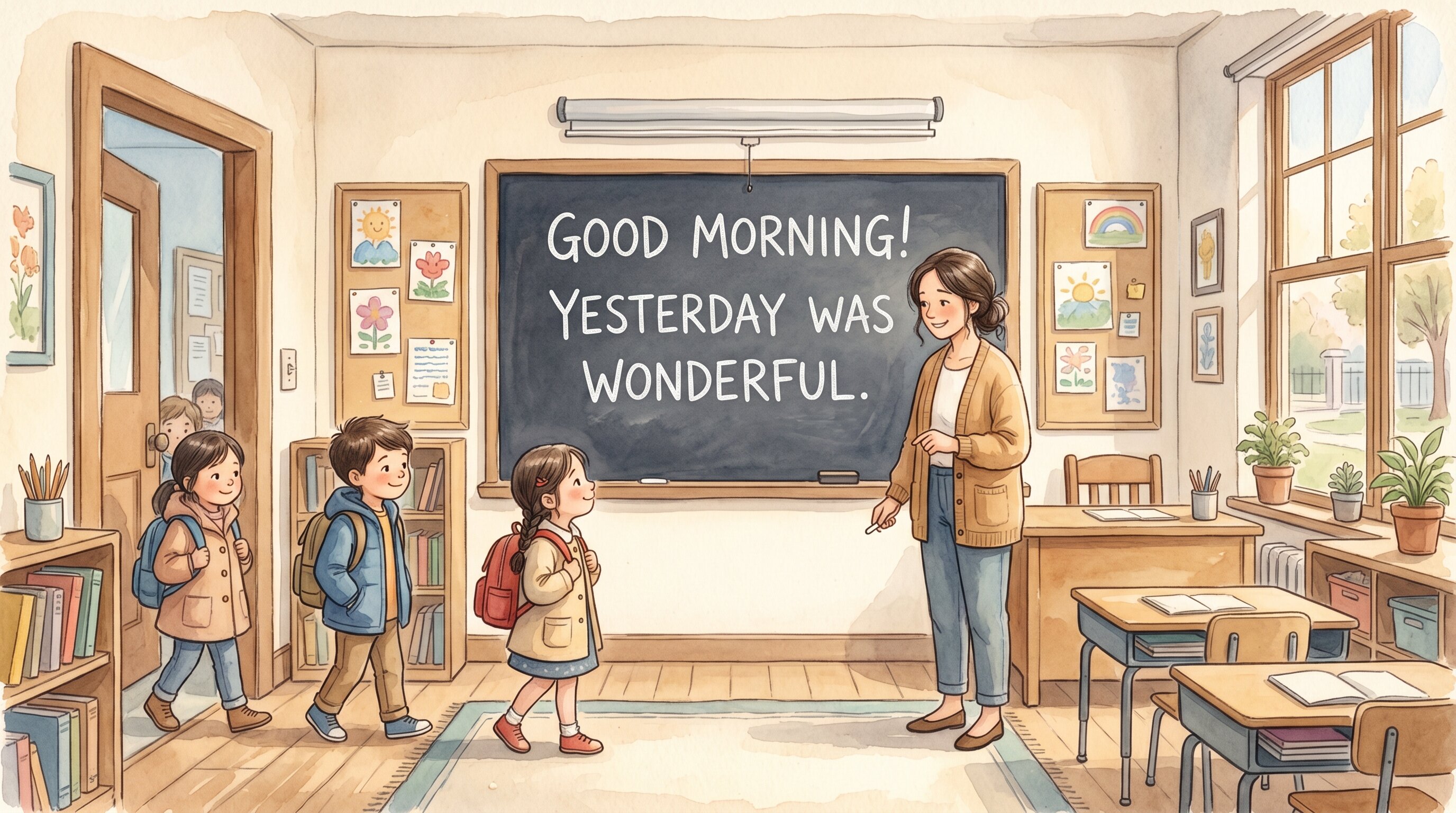
Mrs. Henderson arrived at school early, as she always did. She set her things on her desk and looked at the chalkboard where she had been halfway through a math lesson when the whole thing started. She smiled. She erased the board and wrote in large letters: "Good morning. Yesterday was wonderful."
When her students filed in, they read the message and grinned. Tommy Peters, the boy who had started it all, raised his hand.
"Mrs. Henderson?"
"Yes, Tommy?"
"Can we do that again today?"
Mrs. Henderson looked at him. She thought about her lesson plan. She thought about the curriculum. She thought about standardized tests and report cards and all the things she was supposed to think about.
"I don't think it works that way, Tommy," she said gently. "I don't think anyone started it on purpose. It just happened."
Tommy considered this for a moment. "But it was real, right? It really happened?"
"It really happened."
Tommy nodded, satisfied. He opened his math book. But he was still smiling.
Out on the playground before the first bell, children talked about the day before the way you talk about a snow day or a birthday party — something magical that interrupted the ordinary and made everything shimmer for a little while. Some of them tried to make it happen again. They told jokes. They made funny faces. A few of them even tried just laughing on purpose, hoping to spark the chain reaction.
It didn't work. Not like yesterday. But it didn't matter. Because the trying itself was fun.
Vice Principal Rosenblum walked through the front doors that morning wearing a different pair of shoes. The mud-stained blazer had been replaced with a cardigan. She looked, if anything, slightly more relaxed than usual. When she passed Mrs. Pulaski in the front office, the two women looked at each other.
"Good morning," said Vice Principal Rosenblum.
"Good morning," said Mrs. Pulaski.
They both smiled. Not a big smile. Just a knowing one. The kind of smile that said: we were there.
 Chapter Five
What It Was
No one ever figured out what caused the giggle epidemic of Mayfield Elementary. The local paper ran a small story about it, using words like "unusual" and "unexplained." A reporter called the school to ask questions, but no one could give a satisfying answer. It wasn't a gas leak. It wasn't something in the water. It wasn't a prank.
It was just laughter.
The kind that comes from nowhere and means nothing and changes everything.
Years later, the students who had been there would tell the story to friends, to roommates, to their own children. They would say, "One day in third grade, the whole school just started laughing. Nobody knew why. It lasted all day. It was the best day of my life."
And the person listening would smile and say, "That can't be real."
And the person telling the story would smile back and say, "It was. It really was."
Tommy Peters grew up to be a perfectly ordinary man with a perfectly ordinary job. But every now and then, in the middle of a meeting or standing in line at the grocery store, he would feel a little fizz in his chest — warm and bubbly, like a shaken soda bottle with the cap still on. And he would smile for no reason at all.
Mrs. Henderson taught for another fifteen years before she retired. On her last day, a student asked her what her favorite memory from teaching was. She didn't hesitate.
"There was this one Tuesday," she said. "The whole class just started laughing. I don't know why. I still don't know why. But I laughed too. And it was the most wonderful thing."
Vice Principal Rosenblum never did find her other shoe.
She didn't mind.
As for the giggle epidemic itself, it remains one of those small, sweet mysteries that a town holds close to its heart. Not because it was important. Not because it changed the world. But because, for one perfect day, the entire town of Mayfield remembered something that most people forget:
· · ·
Laughter doesn't need a reason.
It just needs a place to land.
It just needs a place to land."